
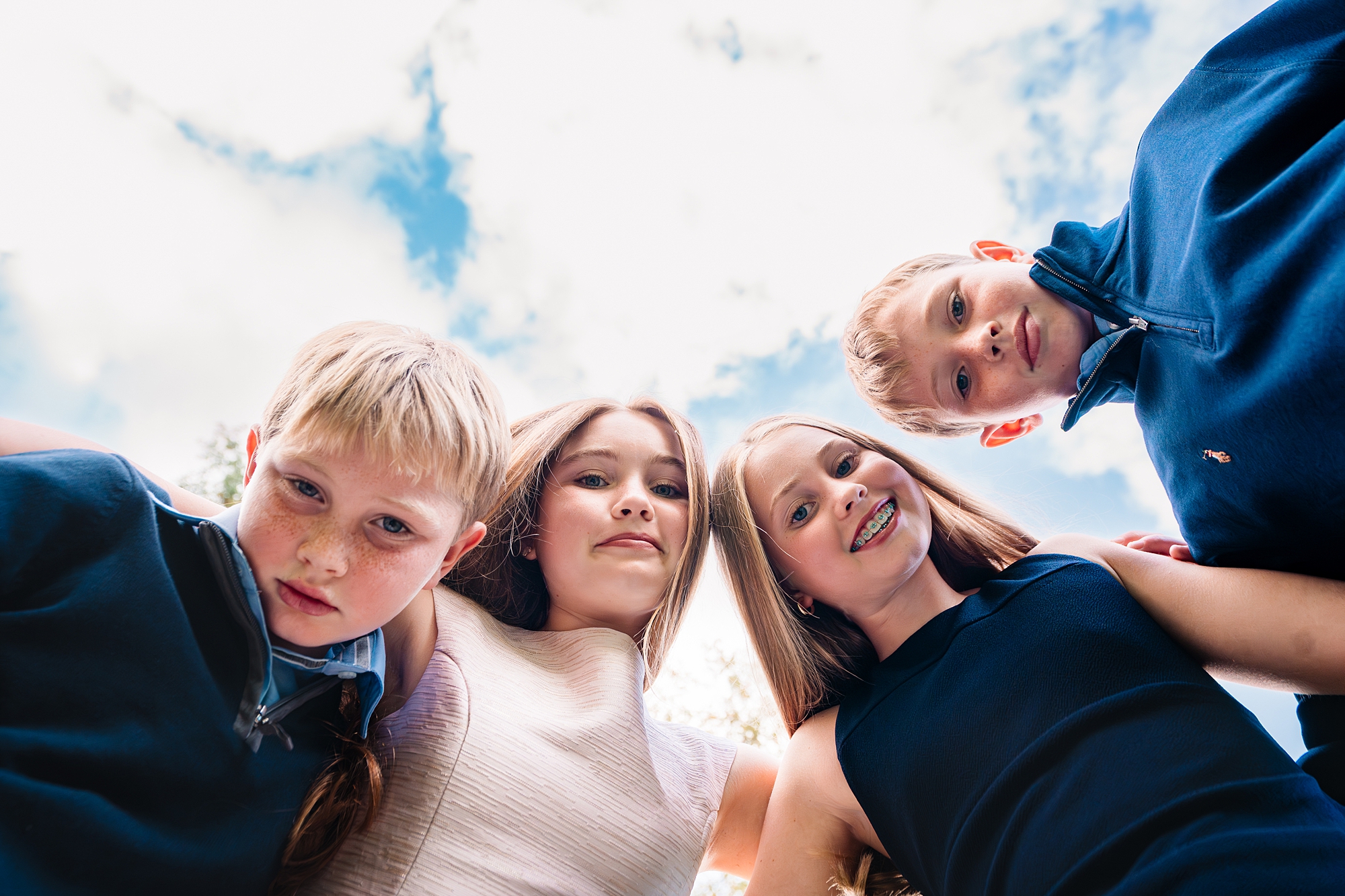
Trying to build a photography portfolio is one of those tasks that sounds simple until you actually sit down to do it and suddenly every photo you’ve ever taken feels emotionally significant and impossible to delete. Or you delete everything and decide you’ve never taken a good photo in your life. Both reactions are completely normal.
Your portfolio is not a storage unit. It is not your greatest hits album from 2016 to present. It is your visual brand, and often the reason someone hires you, follows you, or emails you about mentoring. When photographers ask me how to choose photos for photography portfolio galleries, we usually start by looking at strong photography portfolio examples and talking about why some portfolios feel cohesive and others feel like a random assortment of nice photos.

Sample Portfolio for Families on Location
How to Build a Photography Portfolio That Shows Your Style
When photographers start to build a photography portfolio, they often include too many images or choose images based on emotion instead of strategy. Your portfolio should not just show your favorite photos. It should show your style, consistency, and the type of work you want to book more of.
This is something I talk about a lot as a photography mentor, because portfolio editing is one of the biggest things photographers struggle with. Many photographers really benefit from photography mentoring for portfolio review because it is much easier for someone else to see repetition, gaps, and patterns than it is when you’re emotionally attached to every photo.
When deciding how to choose photos for photography portfolio galleries, look for images that show variety but still feel like they belong together. Looking at strong photography portfolio examples can really help you understand pacing, variety, and how a portfolio should feel when someone scrolls through it.
A strong portfolio should show four main things:
- Composition
- Light and shadow
- Layers
- Storytelling
If your portfolio shows strength in those four areas, it will immediately feel more intentional and professional.

Sample Portfolio for Small Brands
Composition, Light, Layers, and Storytelling
When photographers work with a photography mentor, we often look at photography portfolio examples and evaluate images using these four categories. This is a big part of photography mentoring for portfolio review, because many photographers struggle with how to choose photos for photography portfolio galleries that work together instead of just individually.
Composition is how you arrange a scene. Look for clean edges, intentional framing, and variety in perspective. If every image is people standing in the middle of a field, your portfolio will feel repetitive even if the photos are beautiful.
Light and Shadow show technical ability and style. Include images in different lighting situations so your portfolio does not rely entirely on perfect golden hour light.
Layers add depth. Images with foreground, subject, and background feel more immersive and professional.
Storytelling is what people remember. Your portfolio should feel like a series of moments, not a collection of unrelated images.
If you study strong photography portfolio examples, you will notice they almost always include variety in composition, lighting, layers, and storytelling.

Sample Portfolio for Families at Home
Should You Have Different Portfolios for Different Clients?
One thing I talk about often as a photography mentor is that photographers sometimes try to make one portfolio for everything. But families, newborn clients, and small brands are all looking for different things when they view photography portfolio examples.
Instead of one giant portfolio for everything, it is often better to have separate portfolio galleries or sections for each audience. When photographers are figuring out how to choose photos for photography portfolio galleries, it helps to think about who will be viewing each section and what they are looking for. If you are building separate galleries for different types of work, many photographers use platforms like Squarespace or Adobe Portfolio to organize their website portfolios by category so each audience sees work that is relevant to them.
For example:
- Family portfolios should focus on connection, movement, and storytelling
- Newborn portfolios should focus on soft light, simple compositions, and detail shots
- Brand portfolios should focus on clean compositions, color palettes, and storytelling for businesses
This is something that comes up a lot during photography mentoring for portfolio review, because photographers often have strong images but not a portfolio that clearly speaks to their target audience.
Same photographer. Same style. Different audience. Slightly different portfolio.

Sample Portfolio for Newborns
Editing Your Portfolio: What to Remove
Editing is usually the hardest part when photographers try to build a photography portfolio. Most photographers do not have a problem taking good photos. The problem is narrowing it down and being honest about which images actually strengthen the portfolio.
This is where working with a photography mentor can be really helpful, because photography mentoring for portfolio review often involves identifying repetition, inconsistent editing, or images that just don’t fit the overall portfolio.
If you are trying to figure out how to choose photos for photography portfolio galleries, start by removing:
- Repetitive images
- Images with weak composition
- Images with inconsistent editing
- Images that don’t match your current style
- Images you love emotionally but that are not technically strong
If you look at strong photography portfolio examples, you will notice most portfolios are actually pretty small. Usually around 20 to 40 images, but every image is strong and contributes to the overall story.

How to Build a Photography Portfolio That Evolves Over Time
Learning to build a photography portfolio is not something you do once and finish. Your portfolio should evolve as your work improves, your style becomes more consistent, and the type of work you want to book changes. Many photographers reach a point where they feel stuck, and that is often when working with a photography mentor or doing photography mentoring for portfolio review can help identify what to remove, what to add, and what to shoot next.
If you spend time studying strong photography portfolio examples and really think about how to choose photos for photography portfolio galleries strategically, your portfolio will start to feel more cohesive and more aligned with the work you want to create. Over time, your portfolio becomes less about showing everything you can do and more about showing the work you want to be known for.



be the first to comment